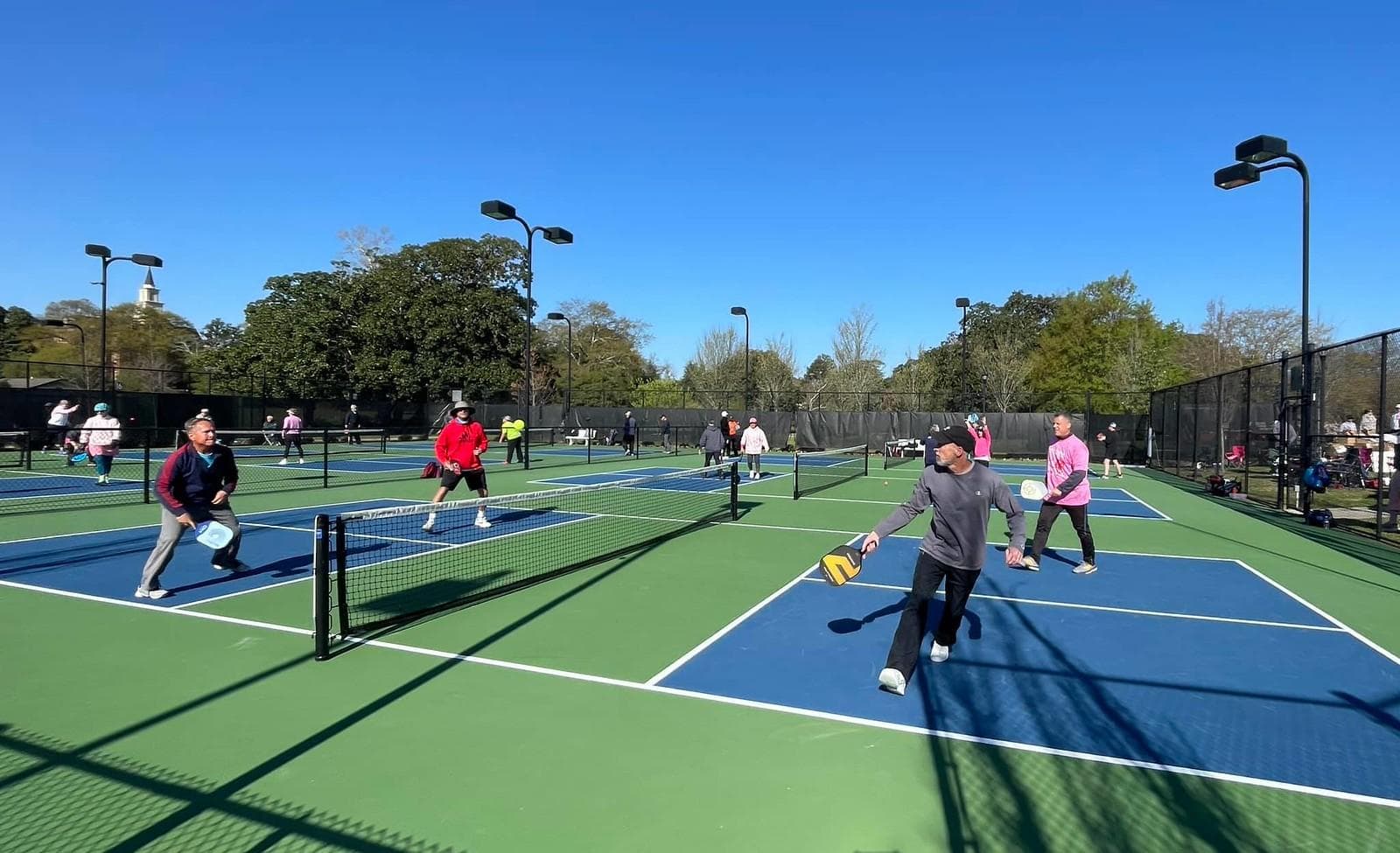
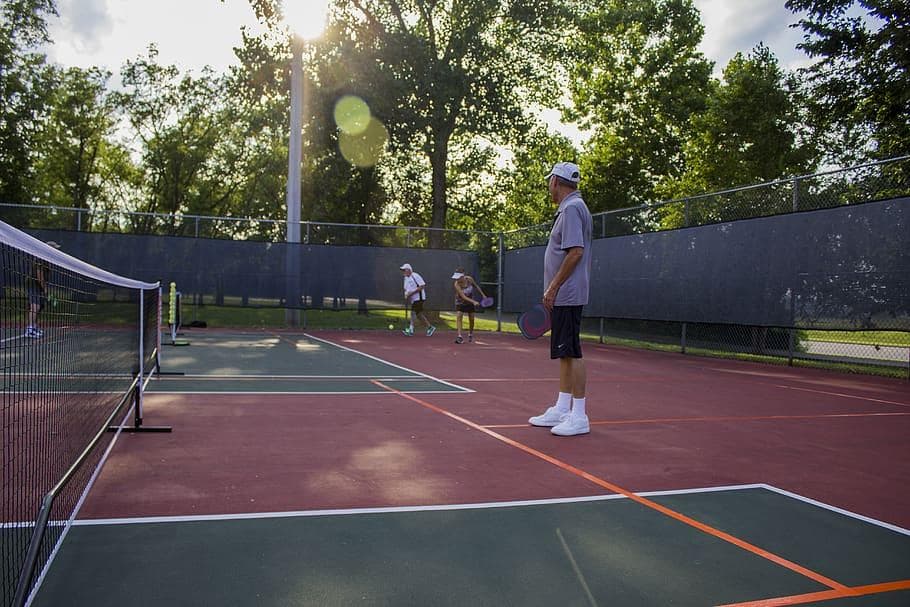
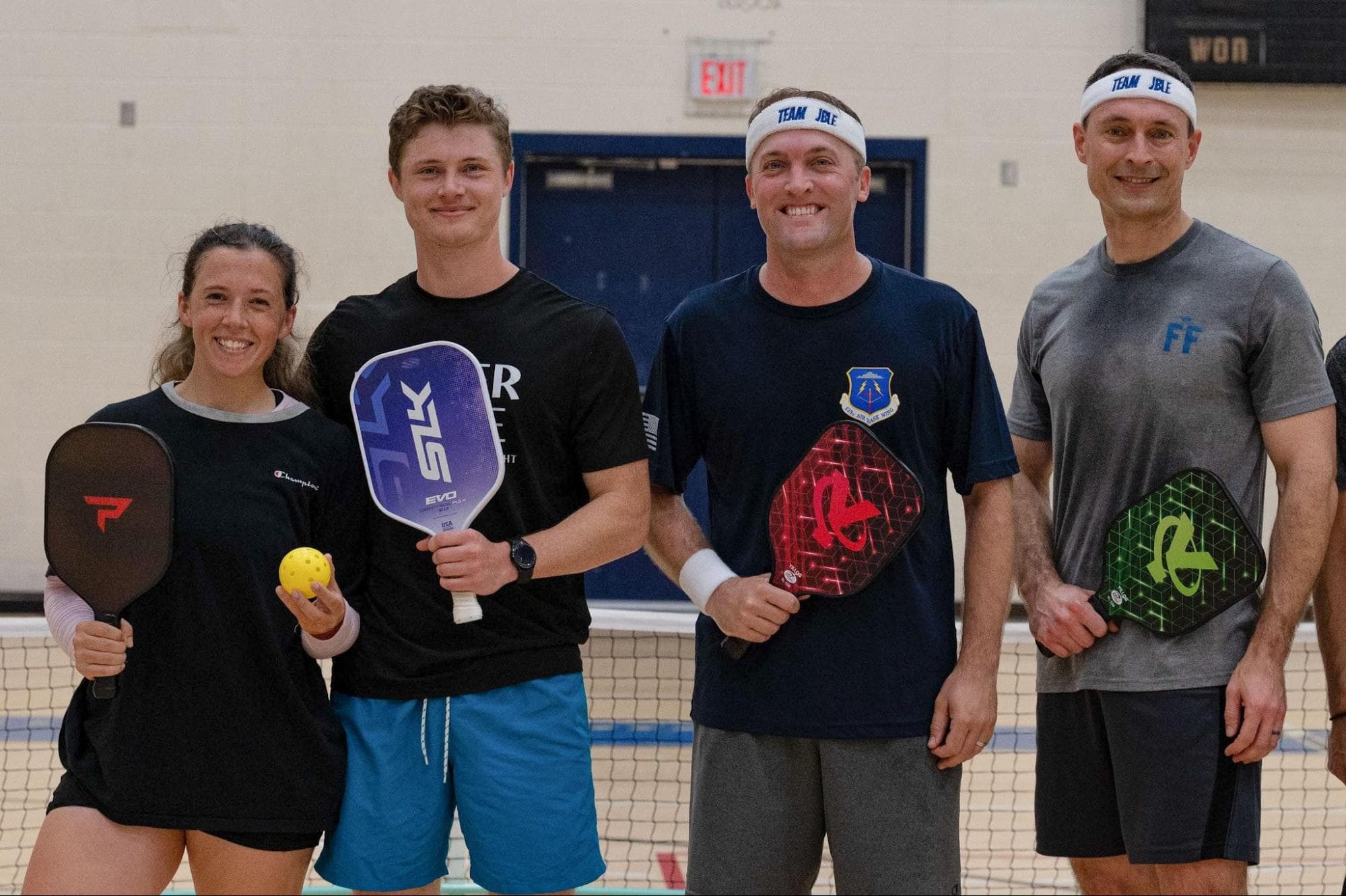
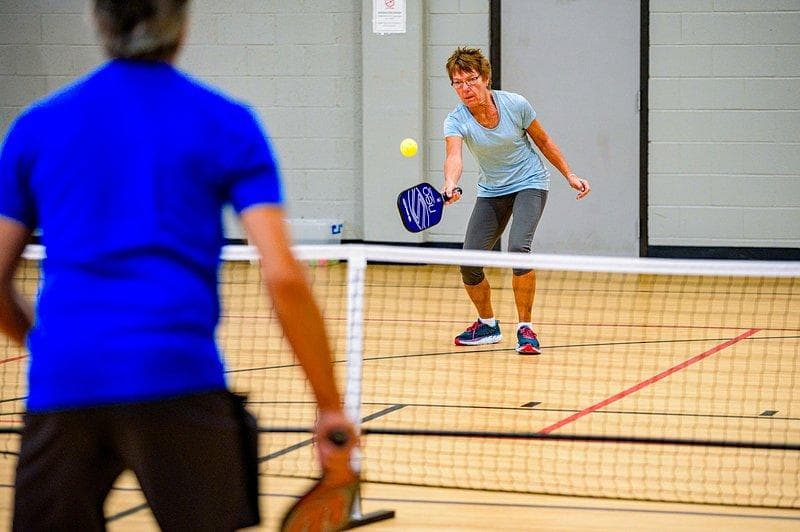
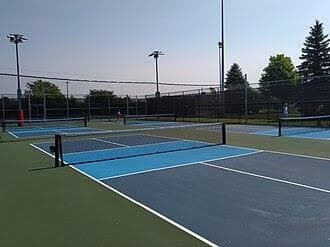
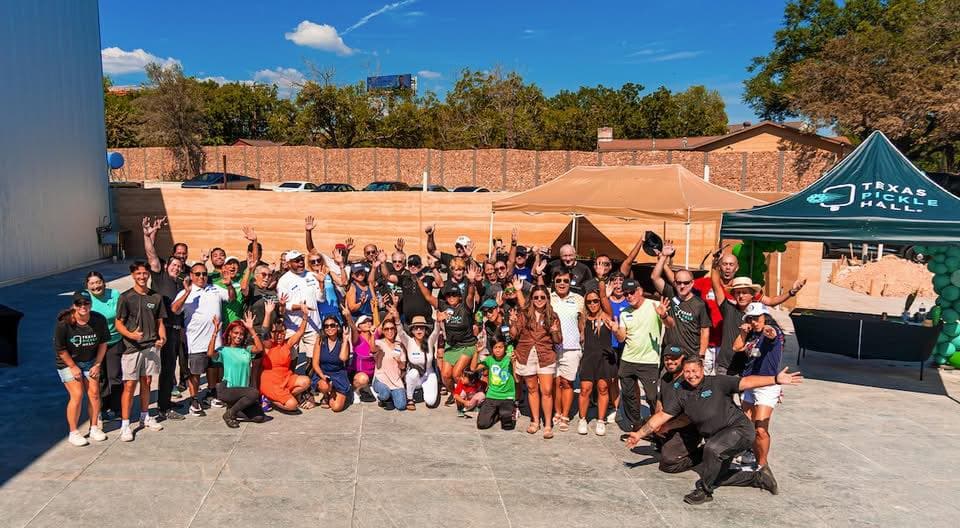
The other seven players in the room range from first-time paddles to a few months in, which is the part nobody warns you about beforehand: the day moves a lot faster when no one is pretending to know more than they do. The first half hour is built to settle the nerves. Your coach walks the room, watches your warm-up rally, and starts naming the small things your body is already doing that will become the bigger things you fix later. By the end of that half hour, you’ve stopped wondering whether you belong here.
Then the drilling starts, paced in small blocks so the group can rest, watch, and try a thing five different times before the next thing. Your coach moves between the two courts, watching every player’s reps, calling out one specific adjustment, walking away, watching again. The drills change to match what the room is actually doing, not a printed script.
The last hour is live games with corrections in real time. Four players per court, small games, scoring not really the point. The patterns from the drills start showing up under pressure, sometimes well and sometimes not, and your coach is courtside calling out what to try next. By the time you walk off, the swing feels like yours. By the time the plan lands in your inbox a week later, you know exactly what to keep working on at the courts near your house.